Semantic translation is the process of using semantic information to aid in the translation of data in one representation or data model to another representation or data model. Semantic translation takes advantage of semantics that associate meaning with individual data elements in one dictionary to create an equivalent meaning in a second system. An example of semantic translation is the conversion of XML data from one data model to a second data model using formal ontologies for each system such as the Web Ontology Language (OWL). This is frequently required by intelligent agents that wish to perform searches on remote computer systems that use different data models to store their data elements. The process of allowing a single user to search multiple systems with a single search request is also known as federated search. Semantic translation should be differentiated from data mapping tools that do simple one-to-one translation of data from one system to another without actually associating meaning with each data element. Semantic translation requires that data elements in the source and destination systems have "semantic mappings" to a central registry or registries of data elements. The simplest mapping is of course where there is equivalence. There are three types of Semantic equivalence: Class Equivalence - indicating that class or "concepts" are equivalent. For example: "Person" is the same as "Individual" Property Equivalence - indicating that two properties are equivalent. For example: "PersonGivenName" is the same as "FirstName" Instance Equivalence - indicating that two individual instances of objects are equivalent. For example: "Dan Smith" is the same person as "Daniel Smith" Semantic translation is very difficult if the terms in a particular data model do not have direct one-to-one mappings to data elements in a foreign data model. In that situation, an alternative approach must be used to find mappings from the original data to the foreign data elements. This problem can be alleviated by centralized metadata registries that use the ISO-11179 standards such as the National Information Exchange Model (NIEM).
DexNet
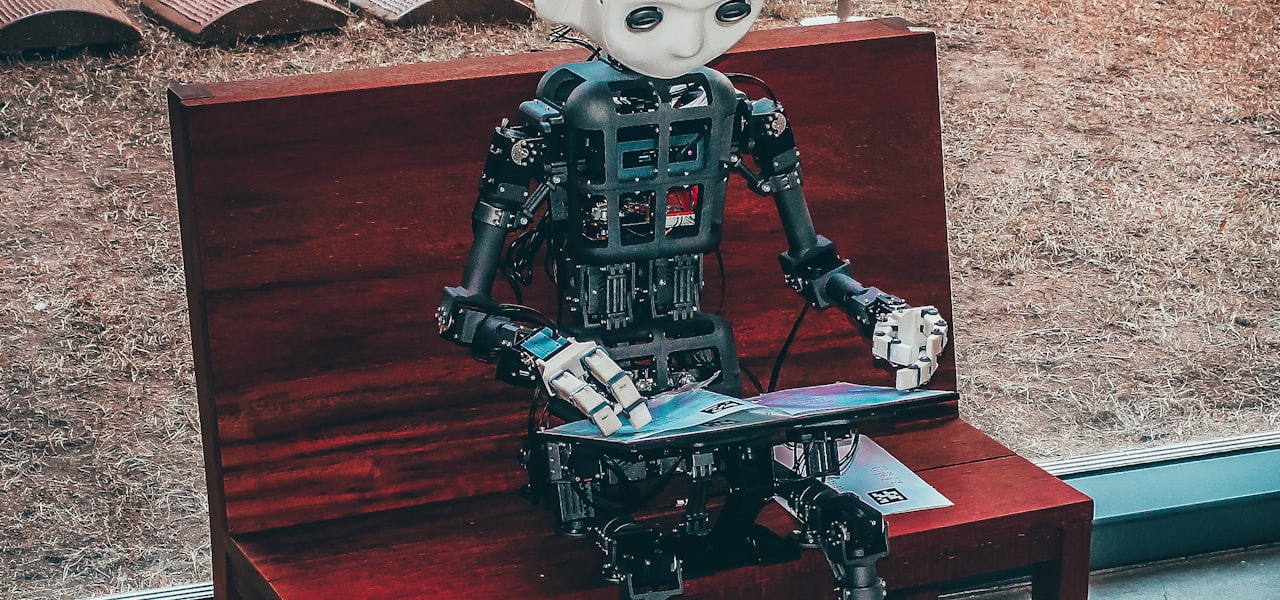
Dex-net is a robotic. It uses a Grasp Quality Convolutional Neural Network to learn how to grasp unusually shaped objects. == History == Dex-net was developed by University of California, Berkeley professor Ken Goldberg and graduate student Jeff Mahler. == Design == Dex-net includes a high-resolution 3-D sensor and two arms, each controlled by a different neural network. One arm is equipped with a conventional robot gripper and another with a suction system. The robot’s software scans an object and then asks both neural networks to decide, on the fly, whether to grab or suck a particular object. It runs on an off-the-shelf industrial machine made by Swiss robotics company ABB. The software learns by attempting to pick up objects in a virtual environment. Dex-Net can generalize from an object it has seen before to a new one. The robot can "nudge" such virtual objects to examine if it is unsure how to grasp them. The trial data set was 6.7 million point clouds, grasps and analytic grasp metrics generated from thousands of 3D models. Grasps are defined as a gripper's planar position, angle and depth relative to an RGB-D sensor. == Mean picks per hour == A metric called mean picks per hour (MPPH) is calculated by multiplying the average time per pick and the average probability of success for a specific set of objects. The new metric allows labs working on picking robots to compare their results. Humans are capable of between 400 and 600 MPPH. In a contest organized by Amazon recently, the best robots were capable of between 70 and 95. Dex-net has achieved 200 to 300.
Glossary of operating systems terms
This page is a glossary of Operating systems terminology. == A == access token: In Microsoft Windows operating systems, an access token contains the security credentials for a login session and identifies the user, the user's groups, the user's privileges, and, in some cases, a particular application. == B == binary semaphore: See semaphore. booting: In computing, booting (also known as booting up) is the initial set of operations that a computer performs after electrical power is switched on or when the computer is reset. This can take tens of seconds and typically involves performing a power-on self-test, locating and initializing peripheral devices, and then finding, loading and starting the operating system. == C == cache: In computer science, a cache is a component that transparently stores data so that future requests for that data can be served faster. The data that is stored within a cache might be values that have been computed earlier or duplicates of original values that are stored elsewhere. cloud: Cloud computing operating systems are recent, and were not mentioned in Gagne's 8th Edition (2009). In contrast, by Gagne's 9th (2012), cloud o/s received 3 pages of coverage (41, 42, 716). Doeppner (2011) mentions them (p. 3), but only to prove that operating systems "are not a solved problem" and that even if the day of the dedicated PC is waning, cloud computing has created an entirely new opportunity for o/s development ala sharing, networks, memory, parallelism, etc. Gagne (2012) adds that in addition to numerous traditional o/s's at cloud warehouses, Virtual machine o/s (VMMs), Eucalyptus, Vware, vCloud Director and others are being developed specifically for cloud management with numerous traditional o/s features (security, threads, file and memory management, guis, etc.) (p. 42). Microsoft's investment in cloud aspects of o/s tend to support that argument. concurrency == D == daemon: Operating systems often start daemons at boot time and serve the function of responding to network requests, hardware activity, or other programs by performing some task. Daemons can also configure hardware (like udevd on some Linux systems), run scheduled tasks (like cron), and perform a variety of other tasks. == E == == F == == G == == H == == I == == J == == K == kernel: In computing, the kernel is a computer program that manages input/output requests from software and translates them into data processing instructions for the central processing unit and other electronic components of a computer. The kernel is a fundamental part of a modern computer's operating system. == L == lock: In computer science, a lock or mutex (from mutual exclusion) is a synchronization mechanism for enforcing limits on access to a resource in an environment where there are many threads of execution. A lock is designed to enforce a mutual exclusion concurrency control policy. == M == mutual exclusion: Mutual exclusion is to allow only one process at a time to access the same critical section (a part of code which accesses the critical resource). This helps prevent race conditions. mutex: See lock. == N == == O == == P == paging daemon: See daemon. process == Q == == R == == S == semaphore: In computer science, particularly in operating systems, a semaphore is a variable or abstract data type that is used for controlling access, by multiple processes, to a common resource in a parallel programming or a multi user environment. == T == thread: In computer science, a thread of execution is the smallest sequence of programmed instructions that can be managed independently by an operating system scheduler. The scheduler itself is a light-weight process. The implementation of threads and processes differs from one operating system to another, but in most cases, a thread is contained inside a process. templating: In an o/s context, templating refers to creating a single virtual machine image as a guest operating system, then saving it as a tool for multiple running virtual machines (Gagne, 2012, p. 716). The technique is used both in virtualization and cloud computing management, and is common in large server warehouses. == U == == V == == W == == Z ==
Plug compatibility
Plug compatibility is a characteristic of computer hardware that performs exactly like that of another vendor. Manufacturers who made replacements for IBM peripherals were referred to as plug-compatible manufacturers (PCMs). Later plug-compatible mainframe (also PCM) referred to IBM-compatible mainframe computers. PCM can also mean plug-compatible machine or plug-compatible module. == Plug compatibility and peripherals == Before the rise of the plug-compatible peripheral industry, computing systems were either configured with peripherals designed and built by the CPU vendor or designed to use vendor-selected rebadged devices. The first examples of plug-compatible IBM subsystems were tape drives and controls offered by Telex beginning 1965. Memorex in 1968 was first to enter the IBM plug-compatible disk market, followed shortly thereafter by a number of suppliers such as CDC, Itel, and Storage Technology Corporation. This was boosted by the world's largest user of computing equipment, the US General Services Administration, buying plug-compatible equipment. Eventually there were third-party plug-compatible alternatives to most first-party peripherals and first-party system main memory. == Plug compatibility and computer systems == A plug-compatible machine is one that is backward compatible with a prior machine. In particular, a new computer system that is plug-compatible has not only the same connectors and protocol interfaces to peripherals, but also binary-code compatibility—it runs the same software as the old system. A plug compatible manufacturer, or PCM, is a company that makes such products. One recurring theme in plug-compatible systems is the ability to be bug compatible as well. That is, if the forerunner system had software or interface problems, then the successor must have (or simulate) the same problems. Otherwise, the new system may generate unpredictable results, defeating the objective of full compatibility. Thus, it is important for customers to understand the difference between a bug and a feature, where the latter is defined as an intentional modification to the previous system (e.g. higher speed, lighter weight, smaller package, better operator controls, etc.). === Plug compatibility and IBM mainframes === The original example of plug-compatible mainframes was the Amdahl 470 mainframe computer which was plug-compatible with the IBM System 360 and 370, costing millions of dollars to develop. Similar systems were available from Comparex, Fujitsu, and Hitachi. Not all were large systems. Most of these system vendors eventually left the PCM market. In late 1981, there were eight PCM companies, and collectively they had 36 IBM-compatible models. == Non-computer usage of plug compatibility == Plug compatibility may also be used to describe replacement criteria for other components available from multiple sources. For example, a plug-compatible cooling fan may need to have not only the same physical size and shape, but also similar capability, run from the same voltage, use similar power, attach with a standard electrical connector, and have similar mounting arrangements. Some non-conforming units may be re-packaged or modified to meet plug-compatible requirements, as where an adapter plate is provided for mounting, or a different tool and instructions are supplied for installation, and these modifications would be reflected in the bill of materials for such components. Similar issues arise for computer system interfaces when competitors wish to offer an easy upgrade path. In general, plug-compatible systems are designed where industry or de facto standards have rigorously defined the environment, and there is a large installed population of machines that can benefit from third-party enhancements. Plug compatible does not mean identical. However, nothing prevents a company from developing follow-on products that are backward-compatible with its own early products.
Key & See
Key & See is a variation of the TV Key service that forms part of the open, standards-based interactive TV services platform provided by Miniweb Interactive. Key & See allows viewers to access the interactive TV content made available by broadcasters and channel owners while leaving quarter of their screen tuned to the programme they are already watching Like TV Key, Key & See can be used with interactive TV services on UK satellite TV provider Sky Digital (BSkyB) Key & See works in the same way as a TV Key but the numeric shortcut code is associated with a broadcaster and a particular TV channel or programme. Miniweb Interactive offers commercial brands and broadcasters the chance to utilise TV Key and Key & See technology as part of its interactive TV services platform
Mistral Vibe
Mistral Vibe or Vibe (Le Chat until May 2026), is a chatbot that uses generative artificial intelligence developed in France by Mistral AI. Mistral Vibe is available in iOS and Android. Its services are operated on a freemium model. == History == In February 2024, Mistral AI released Le Chat. In January 2025, Mistral AI made a content deal with Agence France-Presse (AFP) that lets Le Chat query AFP's entire archive dating back to 1983. On 6 February 2025, a mobile app for Le Chat was released for iOS and Android, and a subscription tier, Pro, was introduced at a cost of $14.99 per month. In July 2025, Mistral AI released Voxtral, an open-source language model that understands and generates audio. Mistral introduced a voice mode for chatting that uses Voxtral, and projects, which allows grouping chats and files. In September 2025, Le Chat introduced the capability to remember previous conversations. In May 2026, Mistral AI announced the rebrand from Le Chat to Mistral Vibe and new features were introduced at the same time.
History of operating systems
Computer operating systems (OSes) provide a set of functions needed and used by most application programs on a computer, and the links needed to control and synchronize computer hardware. On the first computers, with no operating system, every program needed the full hardware specification to run correctly and perform standard tasks, and its own drivers for peripheral devices like printers and punched paper card readers. The growing complexity of hardware and application programs eventually made operating systems a necessity for everyday use. == Background == Early computers lacked any form of operating system. Instead, the user (rarely also the computer operator), had sole use of the machine for a scheduled period of time. The user would deliver his program to a computer operator who would be responsible for loading the computer with the program and data needed for its 'run'. Eventually, the end of a user's program could be detected and a control program automatically loaded which would load the next user's program, relieving the operator of having to load in each user's program individually and introducing the era of 'batched' programming. That is, a number of user programs could all be loaded together in a batch. Loading of program and data was accomplished in various ways including toggle switches (only used by a user on the earliest of computers, but later used by the computer operator to control the computer, e.g., to start it up, to shut it down, to 'pause', to 'dump' its RAM contents, and/or to control its input and/or its output), punched paper cards and magnetic or paper tape. Once loaded, the machine would be set to execute each program singly until that program completed, crashed, exceeded its time limit or went into a(n infinite) loop. In those early days, there were only 'Control Program' units for providing the software necessary to control the computers and ancillary hardware, e.g., for such semi hardware functions as I/O . None of the early 'Control Programs' were sufficiently sophisticated to recognize a looping user program or initiate a recovery action. Detection and recovery from a looping program was another critical operator function and was usually detected by the sound of the looping computer, whereupon the operator would simply initiate a complete dump of the executing program (for later debugging by the programmer) and then load in (or instruct the computer to go on to) the next user's program. Programs could sometimes be debugged via a control panel using dials, toggle switches and panel lights, making it a very manual and error-prone process. But, this was quite rare, since the high cost of even the simplest of the early computers prohibited such exclusive use of a computer by an individual programmer. Almost all program debugging was done away from any computer by the original programmer perusing the program and the dump of its execution obtained, e.g., by the computer operator or automatically by some computer hardware exception detection (such as a timeout, an attempt to divide by zero, or an over or underflow). Programmers then could only very rarely have more than one computer 'run' per day! Symbolic languages, e.g., assemblers and compilers were developed for programmers to translate symbolic program code into machine code that previously would have been hand-encoded. Later machines came with libraries of support code on punched cards or magnetic tape, which would be linked to the user's program to assist in operations such as input and output. This was the genesis of the modern-day operating system; however, machines still ran a single program or job at a time. At Cambridge University in England the job queue was at one time a string from which tapes attached to corresponding job tickets were hung with stationery pegs. == Mainframes == The first operating system used for real work was GM-NAA I/O, produced in 1956 by General Motors' Research division for its IBM 704. Most other early operating systems for IBM mainframes were also produced by customers. Early operating systems were very diverse, with each vendor or customer producing one or more operating systems specific to their particular mainframe computer. Every operating system, even from the same vendor, could have radically different models of commands, operating procedures, and such facilities as debugging aids. Typically, each time the manufacturer brought out a new machine, there would be a new operating system, and most applications would have to be manually adjusted, recompiled, and retested. === Systems on IBM hardware === Building on customer experience and requirements, IBM took on a more active role in developing operating systems for the 709, 1410, 7010, 7040, 7044, 7090 and 7094. IBM also collaborated with universities. The state of affairs continued until the mid 1960s when IBM, already a leading hardware vendor, stopped work on existing systems and put all its effort into developing the System/360 series of machines, all of which used the same instruction and input/output architecture. IBM intended to develop a single operating system for the new hardware, the OS/360. The problems encountered in the development of the OS/360 are legendary, and are described by Fred Brooks in The Mythical Man-Month—a book that has become a classic of software engineering. Because of performance differences across the hardware range and delays with software development, a whole family of operating systems was introduced instead of a single OS/360. IBM wound up releasing a series of stop-gaps followed by two longer-lived operating systems: OS/360 for mid-range and large systems. This was available in three system generation options: PCP for early users and for those without the resources for multiprogramming. MFT for mid-range systems, replaced by MFT-II in OS/360 Release 15/16. This had one successor, OS/VS1, which was discontinued in the 1980s. MVT for large systems. This was similar in most ways to PCP and MFT (most programs could be ported among the three without being re-compiled), but has more sophisticated memory management and a time-sharing facility, TSO. MVT had several successors including the current z/OS. DOS/360 for small System/360 models had several successors including the current z/VSE. It was significantly different from OS/360. IBM maintained full compatibility with the past, so that programs developed in the sixties can still run under z/VSE (if developed for DOS/360) or z/OS (if developed for MFT or MVT) with no change. IBM also developed TSS/360, a time-sharing system for the System/360 Model 67. Overcompensating for their perceived importance of developing a timeshare system, they set hundreds of developers to work on the project. Early releases of TSS were slow and unreliable; by the time TSS had acceptable performance and reliability, IBM wanted its TSS users to migrate to OS/360 and OS/VS2; while IBM offered a TSS/370 PRPQ, they dropped it after 3 releases. Several operating systems for the IBM S/360 and S/370 architectures were developed by third parties, including the Michigan Terminal System (MTS) and MUSIC/SP. === Other mainframe operating systems === Control Data Corporation developed the SCOPE operating systems in the 1960s, for batch processing and later developed the MACE operating system for time sharing, which was the basis for the later Kronos. In cooperation with the University of Minnesota, the Kronos and later the NOS operating systems were developed during the 1970s, which supported simultaneous batch and time sharing use. Like many commercial time sharing systems, its interface was an extension of the DTSS time sharing system, one of the pioneering efforts in timesharing and programming languages. In the late 1970s, Control Data and the University of Illinois developed the PLATO system, which used plasma panel displays and long-distance time sharing networks. PLATO was remarkably innovative for its time; the shared memory model of PLATO's TUTOR programming language allowed applications such as real-time chat and multi-user graphical games. For the UNIVAC 1107, UNIVAC, the first commercial computer manufacturer, produced the EXEC I operating system, and Computer Sciences Corporation developed the EXEC II operating system and delivered it to UNIVAC. EXEC II was ported to the UNIVAC 1108. Later, UNIVAC developed the EXEC 8 operating system for the 1108; it was the basis for operating systems for later members of the family. Like all early mainframe systems, EXEC I and EXEC II were a batch-oriented system that managed magnetic drums, disks, card readers and line printers; EXEC 8 supported both batch processing and on-line transaction processing. In the 1970s, UNIVAC produced the Real-Time Basic (RTB) system to support large-scale time sharing, also patterned after the Dartmouth BASIC system. Burroughs Corporation introduced the B5000 in 1961 with the MCP (Master Control Program) operating system. The B5000